
Cripple Creek, Colorado: The World’s Greatest Gold Camp
Cripple Creek sits way up there—9,494 feet—on the southwest side of Pikes Peak, and honestly, it’s one of the most surprising little towns Colorado has. Back in the 1880s, it was just a regular cattle ranch. Then gold fever hit, and the place exploded. By 1910, miners had pulled more than 21 million ounces of gold out of those hills—more than California and Alaska’s rushes put together. For a while, Cripple Creek was booming. Picture 35,000 people packed into a mountain town, with two opera houses, a wild run of 75 saloons, eight newspapers, and even a stock exchange. It was the fourth biggest city in Colorado, believe it or not.
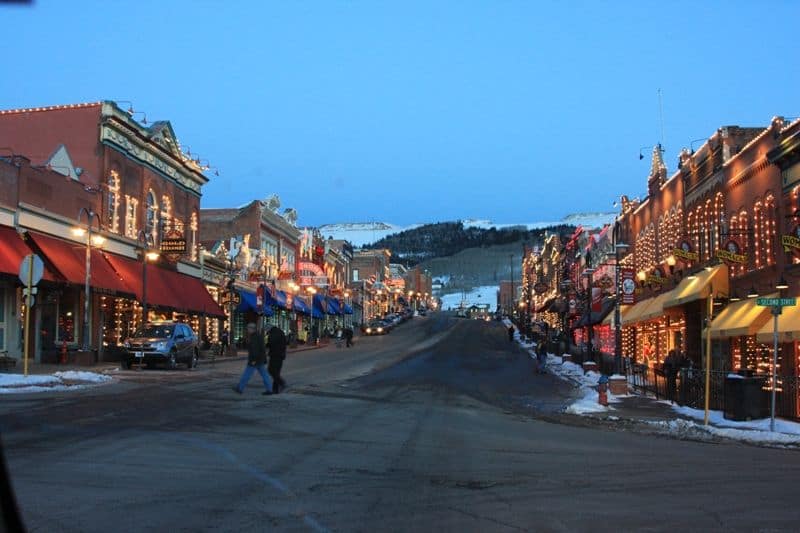
These days, the old brick buildings are still standing, and the whole downtown is a National Historic Landmark. The place hums with casinos, a real-deal underground gold mine you can actually tour, a narrow-gauge railroad, wild donkeys wandering the streets, and a theater scene that goes all the way back to the 1890s. It’s Colorado history you can walk through, not just read about—colorful, gritty, and still very much alive.
Quick Facts
| County | Teller County (county seat) |
| Distance from Colorado Springs | 45 miles southwest via Highway 24 & Highway 67 (approximately 1 hour) |
| Distance from Denver | 90 miles southwest via US-285 or I-25 & Highway 24 (approximately 1 hour 45 minutes) |
| Elevation | 9,494 feet (2,894 m) |
| Population | 1,155 (2020 census) |
| Incorporated | June 9, 1892 |
| Notable Feature | Cripple Creek Historic District — National Historic Landmark, designated 1961; one of three Colorado cities with legalized casino gambling |
From Cow Pasture to Gold Camp: The Making of Cripple Creek
The land that would become Cripple Creek spent most of the 19th century as unremarkable high-country ranchland, dismissed by prospectors who had been burned by the infamous Mount Pisgah Hoax — a salted mine that lured and then humiliated thousands of would-be fortune seekers in the 1880s. The memory of that embarrassment kept serious mining interest away from the area for years, even as a persistent cowboy named Bob Womack quietly worked the gulches of the Broken Box Ranch through the late 1870s and 1880s, convinced that gold lay beneath the volcanic rock of the old caldera. In December 1890, after more than a decade of patient prospecting, Womack found a rich vein of gold telluride ore in Poverty Gulch. True to his tragicomic legend, he celebrated his discovery in Colorado Springs, sold his claim for a paltry $500 in a moment of celebration, and never shared in the wealth his persistence had uncovered.
Womack’s find ignited a rush that transformed the valley with startling speed. Winfield Scott Stratton, a Colorado Springs carpenter who had prospected the area for years, staked his claim on Battle Mountain on July 4, 1891, naming it the Independence Mine — one of the largest gold strikes in American history. Stratton became the first Cripple Creek millionaire, eventually selling the Independence for $11 million in 1899. The district attracted thousands of investors, miners, merchants, and speculators, and Denver real estate men Horace Bennett and Julius Myers platted the townsite on their former ranch. By 1892, the town had 5,000 residents and had been officially incorporated; two years later the population had exploded to 18,000.
The catastrophe came in April 1896, when two devastating fires swept through Cripple Creek within four days of each other, destroying most of the hastily built wood-frame business district and leaving thousands homeless. Rather than abandon the camp, residents and investors rebuilt immediately — this time in brick and stone, and with a permanence that reflected their confidence in the district’s future. Most of the handsome Victorian commercial buildings that define Bennett Avenue today date from this rapid reconstruction in 1896. By 1900, the Cripple Creek mining district operated 500 active mines and was producing gold at an astounding rate. Two opera houses, 15 newspapers, dozens of hotels, and a full stock exchange made the high-altitude boomtown one of the most cosmopolitan communities between Chicago and San Francisco.
Gold production inevitably declined after 1905 as the richest veins were exhausted. The population dwindled decade by decade through the early 20th century, and by mid-century Cripple Creek teetered on the edge of becoming a ghost town. A brief renaissance as a tourist curiosity — underground mine tours, a remodeled historic hotel, a small railroad — kept the town alive through the postwar decades. The decisive turning point came in 1991, when Colorado voters approved limited-stakes casino gambling in three historic mountain communities: Cripple Creek, Central City, and Black Hawk. The legalization of gaming brought an economic revival that funded the restoration of dozens of historic buildings and drew visitors back to Bennett Avenue in numbers not seen since the gold rush itself.
Mollie Kathleen Gold Mine: 1,000 Feet Underground
No visit to Cripple Creek is complete without descending into the Mollie Kathleen Gold Mine, the most celebrated underground attraction in the Colorado Rockies. The mine is named for Mollie Kathleen Gortner, who discovered gold on this site in 1891 — one of the first women in Colorado to stake a mining claim in her own name. Unlike Bob Womack, Mollie held on to her claim: it produced gold steadily until 1961 and generated wealth measured in the billions by today’s values.
What makes the Mollie Kathleen tour unique among Colorado mine experiences is its authenticity and depth. Visitors don hard hats and descend 1,000 feet into the earth via a vertical shaft elevator — the same type of hoist used by miners in the 1890s — to explore drift tunnels bored through solid rock at the turn of the 20th century. Guides, many of them with actual mining backgrounds, demonstrate historic and modern equipment including mucking machines, drill rigs, and ore cars, and point out genuine gold veins still visible in the tunnel walls. The underground tram air locomotive, the blasting and drilling demonstrations, and the sheer scale of the excavation make this a genuinely immersive experience rather than a sanitized museum walk-through. Every visitor leaves with a piece of free gold ore — a fitting souvenir from the world’s greatest gold camp.
The Cripple Creek & Victor Narrow Gauge Railroad
Cripple Creek’s other signature experience departs from an 1894 vintage depot and winds through four miles of rugged mountain terrain on a 45-minute round trip that passes through the ghost camps and mine ruins of the gold rush district. The Cripple Creek & Victor Narrow Gauge Railroad operates a vintage 0-4-0 steam locomotive that hauls open passenger cars through the high-altitude landscape surrounding the town, with an educational narration that traces the district’s boom-and-bust arc through the mine structures, waste dumps, and abandoned townsite remnants visible from the tracks.
The railroad runs from late May through Labor Day on a first-come, first-served basis with departures every 70 minutes — no advance reservation required. Passengers should dress in layers, as the open cars can be cool even on warm summer days at nearly 10,000 feet. The route passes through the former camps of Anaconda and Poverty Gulch, offering some of the most evocative landscape in Colorado’s mining country, and the views of Pikes Peak and the surrounding Sangre de Cristo range are exceptional on clear days. Combined with the Mollie Kathleen mine tour, the narrow-gauge railroad gives visitors a remarkably complete picture of the Cripple Creek district’s industrial past.
A National Historic Landmark: Bennett Avenue and the Museums
The Cripple Creek Historic District, designated a National Historic Landmark in 1961, encompasses the entire city and its surrounding landscape — an extraordinary designation that reflects the exceptional integrity of the surviving gold rush-era built environment. Bennett Avenue, the main commercial street, is lined with the handsome brick and stone Victorian storefronts rebuilt after the 1896 fires, their facades largely unchanged from the boomtown era. A stroll down Bennett is one of the most genuinely atmospheric experiences in Colorado’s historic towns, with the added entertainment of the working casinos that now occupy many of the 19th-century commercial buildings.
The Cripple Creek District Museum, housed in the original Midland Terminal Railroad depot, is the anchor of the district’s interpretive story, with exhibits covering the geology of the gold deposit, the social world of the boomtown, and the district’s labor history — including the dramatic Western Federation of Miners strikes of 1894 and 1903 that put Cripple Creek at the center of Colorado’s most turbulent chapter of labor conflict. The Outlaws & Lawmen Jail Museum occupies the original 1892 jailhouse and offers a vivid look at law enforcement in the Wild West, including exhibits on notorious figures connected to Cripple Creek and authentic original jail cells. Robert Ford, the man who shot Jesse James, was actually banned from Cripple Creek by the local sheriff before he could even set foot in town — a testament to the standards the town tried to maintain even at the height of its wildness.
The Old Homestead House Museum stands apart as the most historically provocative of Cripple Creek’s attractions. Built in 1896 by the legendary madam Pearl DeVere, this was the most elegant and expensive brothel in the Cripple Creek district, catering to the wealthy mine owners and investors who represented the top of the boomtown social hierarchy. Opened as a museum in 1958, the lovingly preserved house offers guided tours that illuminate a dimension of mining camp life rarely addressed in conventional historical accounts. The Cripple Creek Heritage Center provides a modern interpretive complement to these historic sites, with interactive exhibits, geological displays, and a panoramic viewing deck overlooking the Sangre de Cristo Mountains that gives visitors an unforgettable sense of the town’s dramatic high-altitude setting.
Casino Gaming: Colorado’s High-Altitude Gambling Destination
Cripple Creek is one of only three cities in Colorado — alongside Central City and Black Hawk — where casino gambling is legal, a distinction that has defined the town’s economy and character since 1991. The legalization of gaming transformed Bennett Avenue’s historic storefronts into a compact casino district that drew visitors and investment back to a town that had dwindled to fewer than 600 residents. Gaming revenues have funded millions of dollars in historic preservation, not just in Cripple Creek but across Colorado — a portion of casino taxes flows directly to the state historical fund, supporting preservation projects statewide.
Today Cripple Creek hosts nearly a dozen casinos ranging from intimate historic buildings with a handful of slot machines to full-scale resort properties. Bronco Billy’s Casino, repeatedly voted the best casino in Colorado Springs and the surrounding region, anchors the strip with a sportsbook, table games, slots, and multiple dining options. The Brass Ass Casino occupies one of the historic district’s oldest commercial buildings, with a famous brass donkey statue that has become one of the town’s most-photographed landmarks. Century Casino and the Double Eagle Hotel & Casino round out the larger properties, both offering hotel accommodations, restaurants, and a full complement of table games and slots. The atmosphere throughout is decidedly Old West — Cripple Creek’s casinos have none of the corporate anonymity of Las Vegas, and the Victorian brick surroundings give gambling here a genuine sense of historical place.
Wild Donkeys, the Butte Theater, and the Town’s Living Traditions

Cripple Creek’s most endearing attraction requires no ticket and no planning: the town’s resident herd of wild donkeys, direct descendants of the burros that served the gold rush mining operations more than a century ago. When the mines closed, miners simply released their donkeys into the surrounding hills rather than transport them. The animals established a feral population that has persisted ever since, roaming freely around town from May through October. The donkeys are fully docile and accustomed to human contact; visitors can feed them approved treats — carrots, apples, and commercial donkey snacks available from local shops — and photograph them against the Victorian streetscape in scenes that feel lifted directly from the 1890s.
Every June, the town celebrates its famous residents with Donkey Derby Days, the most beloved event on Cripple Creek’s annual calendar. The last full weekend of June brings participants from across the region to cheer donkeys through a race course in the heart of Bennett Avenue, with festivities including live music, food vendors, street performers, and the kind of good-natured small-town pageantry that has characterized the event for decades.
The Butte Theater, dating to 1896 and beautifully restored with period wallpaper, Victorian chandeliers, and seating for 184 guests, is the cultural heart of Cripple Creek. The theater has hosted live professional productions continuously since the gold rush era, making it one of the longest-running theatrical venues in the Rocky Mountain West. Today the Butte presents a rotating season of musicals, classic melodramas, and comedies from May through October, produced by professional acting troupes to a standard that would surprise visitors expecting small-town amateur fare. An evening at the Butte, following a day of mine tours and museum visits, offers one of the most complete Old West cultural experiences available anywhere in Colorado.
Outdoor Adventures: Gold Belt Byway, Florissant Fossils, and High-Country Trails
Cripple Creek sits at the center of one of Colorado’s most scenic and historically rich driving routes. The Gold Belt Tour Scenic Byway is a 131-mile loop that winds through the Pikes Peak region’s former mining country, connecting Cripple Creek and its sister city Victor with Florence, Cañon City, and Florissant through a succession of dramatic canyon landscapes, historic mine structures, and mountain vistas. The byway passes through three distinct routes — Phantom Canyon Road, Shelf Road, and High Park Road — each offering a different character, from the narrow canyon walls and old railroad grade of Phantom Canyon to the high ridgeline panoramas of the High Park approach. The Royal Gorge Bridge and Park lies at the southern end of the loop, providing a logical culmination to a full day’s drive.
Florissant Fossil Beds National Monument, approximately 35 miles northwest of Cripple Creek via Highway 24, deserves a dedicated half-day. About 34 million years ago, a volcanic eruption buried a thriving subtropical lake ecosystem under ash, preserving an extraordinary diversity of insects, plants, fish, and birds in exquisite detail. The monument’s visitor center displays some of the finest examples of these Eocene-era fossils, and the Ponderosa Loop and Petrified Forest Trails offer an easygoing walk through a landscape of giant petrified sequoia stumps — the largest concentration of petrified wood in the world — that stand as haunting monuments to a vanished ancient ecosystem.
Mountain View Adventure Park in Cripple Creek provides a more immediate outdoor option with a playground, disc golf course, BMX track, dog park, and hiking and biking trails, all set against the spectacular backdrop of Pikes Peak. The high-country trails in the surrounding Teller County landscape offer everything from gentle valley walks to demanding ridge climbs with views that take in the full sweep of the Sangre de Cristo Mountains to the south and the Front Range to the east. Nearby Victor, just four miles from Cripple Creek, adds additional cultural and historical interest as a well-preserved companion mining town with its own Victorian streetscape and the Victor Lowell Thomas Museum — named for the famed journalist and world traveler who grew up there.
High-Altitude Climate and Best Times to Visit
At 9,494 feet, Cripple Creek sits higher than most Colorado ski resorts and experiences a genuine subalpine climate. Summers are cool and short, with daytime highs from June through August typically reaching the mid-60s to low 70s Fahrenheit and nights regularly dropping to the low 40s or even high 30s. The thin air and intense solar radiation at altitude mean sunscreen is essential even on mild days. Afternoon thunderstorms are frequent from July through early September, usually brief but sometimes intense. Fall arrives early — by mid-September the aspen groves on the surrounding hillsides begin their golden transformation, and October days in the 50s with crisp, clear air make for some of the most beautiful conditions of the year.
Winter is cold and snowy, with temperatures regularly dipping below freezing and significant snowfall from November through March. The casinos operate year-round regardless of weather, making Cripple Creek a viable destination in any season for those focused on gaming and historic exploration. Spring is a slow transition, with unpredictable conditions through May. The peak visitor season runs from Memorial Day through Labor Day, when the Narrow Gauge Railroad, the Mollie Kathleen Mine tours, and the donkey herd are all in full operation. The Butte Theater season and the Donkey Derby Days celebration in late June represent the high points of the summer calendar.
Planning Your Visit
Getting There: Cripple Creek lies approximately 45 miles southwest of Colorado Springs via Highway 24 west to Divide, then south on Highway 67 — a scenic mountain drive of about one hour. From Denver, the most direct route is approximately 90 miles via US-285 south to Fairplay, then east on Highway 24, or via I-25 south to Colorado Springs and then the Highway 24/67 approach. Colorado Springs Airport (COS) is the closest commercial airport, about one hour from town. No public transit serves Cripple Creek, so a personal vehicle or rental car is required.
Getting Around: Cripple Creek’s compact historic downtown is entirely walkable. Bennett Avenue and the surrounding blocks contain virtually all of the casinos, museums, restaurants, and shops within easy walking distance. The Mollie Kathleen Gold Mine is located about a mile north of downtown on Highway 67. The Narrow Gauge Railroad depot is just east of the main street. Victor is four miles south via Highway 67.
Best Time to Visit: Summer (late May through September) offers the full experience: Narrow Gauge Railroad, Mollie Kathleen Mine tours, roaming donkeys, Butte Theater productions, and the Donkey Derby Days festival in late June. Fall (September-October) brings spectacular aspen color and fewer crowds. Casinos and most museums operate year-round. Winter visitors should come prepared for genuine high-altitude cold and potential road conditions on the mountain approaches.
Lodging & Budget: Cripple Creek’s casino hotels — including the Double Eagle Hotel & Casino and Bronco Billy’s — offer convenient on-site accommodations at generally reasonable rates, often with promotional packages tied to gaming. The Hotel St. Nicholas, a beautifully restored historic property, is the most atmospheric lodging option for those seeking immersion in the gold rush era. The town also hosts the world’s highest KOA campground, a popular option for summer visitors. Rates are considerably more affordable than Colorado’s resort communities, reflecting the town’s more accessible, working-class character.
Whether you’re drawn by the drama of descending 1,000 feet into a 19th-century gold mine, the flickering lights of a Victorian-era casino on a cold mountain night, the improbable sight of wild donkeys wandering a brick-lined boom-town street, or simply the chance to stand in the place where more gold was pulled from the earth than anywhere in American history, Cripple Creek delivers Colorado’s most singular historical experience. It is a town that burned twice, nearly died twice, and reinvented itself each time with the same stubbornness and irreverence that drove Bob Womack to dig through a frozen cow pasture for a decade in search of gold — and ultimately find it.
Related Articles
Explore more Colorado adventures and expert guides:
- Victor, Colorado: Cripple Creek’s Forgotten Sister City and the Heart of the Gold District
- Pikes Peak: A Complete Guide to America’s Mountain
- Florissant Fossil Beds National Monument: Colorado’s Ancient Volcanic Preserve
- Gold Belt Tour Scenic Byway: A Complete Guide to Colorado’s Mining Country Loop
- Central City & Black Hawk: Colorado’s Other Historic Gaming Destinations