
Steamboat Springs, Colorado: Ski Town USA Where the Powder Never Stops and the Hot Springs Always Flow
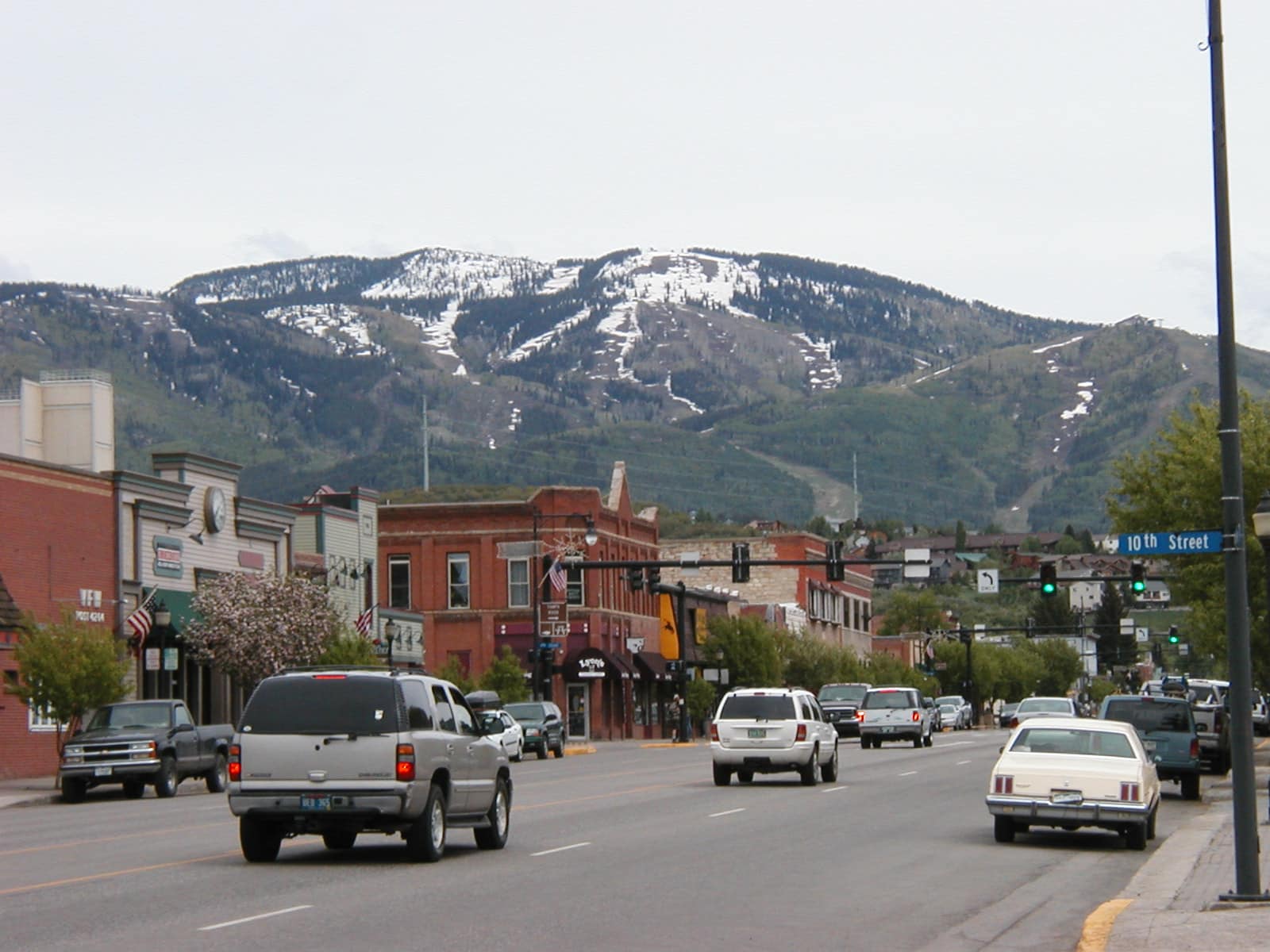
Steamboat Springs sits in a broad mountain valley at 6,728 feet along the Yampa River in Routt County, about 160 miles northwest of Denver — roughly a three-hour drive over Rabbit Ears Pass on US-40. The town of about 13,500 people has a split personality that somehow works perfectly: half working cattle ranch community, half world-class ski destination, with enough hot springs, hiking trails, and craft breweries to keep visitors busy year-round. Steamboat doesn’t try to be Aspen or Vail. It has its own identity — relaxed, genuinely Western, and unapologetically proud of the “champagne powder” that has made it famous among skiers worldwide.
The town’s nickname, “Ski Town USA,” was earned honestly. Steamboat has sent more athletes to the Winter Olympics than any other town in the United States — over 100 Olympians have called it home. That tradition runs deep here, starting with Norwegian immigrant Carl Howelsen, who built a ski jump on the hill that still bears his name in 1913 and taught the locals what serious snow could really do. Today, Howelsen Hill Ski Area remains the oldest continuously operating ski area in Colorado, and the Steamboat Ski Resort on Mount Werner — with 3,000 skiable acres and an average of 349 inches of snow per year — is one of the state’s premier destinations.
What surprises many first-time visitors is how well-rounded Steamboat truly is. Yes, the skiing is exceptional, but the town thrives in summer too, drawing mountain bikers, fly fishers, hikers, and rafters. The natural hot springs that gave the town its name (early French trappers thought the bubbling springs sounded like a steamboat) are a year-round draw, particularly the clothing-optional Strawberry Park Hot Springs up the mountain road north of town. If you’re debating between the glossy ski resorts of Summit County and something with more authentic Colorado character, Steamboat Springs makes a compelling case.
Quick Facts
| Elevation | 6,728 feet (2,051 m) |
| Population | ~13,500 |
| County | Routt County |
| Distance from Denver | ~160 miles (approx. 3 hours via US-40) |
| Nearest Airport | Yampa Valley Regional Airport (HDN), Hayden — 22 miles west |
| Average Annual Snowfall | 349 inches at the ski resort |
| Known For | Champagne powder skiing, hot springs, over 100 Olympic athletes |
History of Steamboat Springs
Long before European settlers arrived, the Ute people lived in and traveled through the Yampa Valley, drawn by the same hot springs that would later define the town’s character. They called the area “smoking waters” and used the springs for bathing and healing. The first non-Native American explorers came through in the early 1800s, including fur trappers working for the American Fur Company. The legend says that French-Canadian trappers, hearing the rhythmic chugging sound of a particular carbonated spring near the Yampa River, named the spot “Steamboat Spring” — though the original spring was ironically destroyed when a railroad was blasted through in 1908.
The town was officially platted in 1884, and the arrival of the Moffat Railroad in 1908 opened the valley to broader settlement and commerce. Agriculture dominated the economy throughout the late 19th and early 20th centuries — Routt County remains significant ranching country to this day, and you’ll still see cattle drives moving through the valley in the fall. The transformation toward a ski economy began in earnest with Norwegian immigrant Carl Howelsen. He arrived in 1913, built the ski jump that launched local ski culture, and organized the first Winter Carnival in 1914, a tradition that continues annually as one of the oldest winter festivals in the American West. The modern Steamboat Ski Resort opened on Mount Werner in 1963, developed partly through the vision of local rancher and skiing pioneer Marvin Crawford, and grew steadily through the 1970s ski boom into the major destination it is today.
Unlike many Colorado mountain towns that were built entirely on mining booms that went bust, Steamboat’s economy has always been diversified — ranching, tourism, and a strong local community rather than a single extractive industry. That gives it a stability and authenticity that’s harder to fake. The ranching heritage is visible everywhere, from the working livestock operations you’ll pass on US-40 to the rodeo grounds at Howelsen Park, where the Pro Rodeo Series runs all summer long.
Neighborhoods and Districts
Steamboat Springs has two distinct centers that pull in different directions — and that tension is actually part of the charm.
Old Town Steamboat is the historic downtown centered on Lincoln Avenue, the main drag that runs through the valley. This is where you’ll find locally owned restaurants, independent shops, the hot springs complex, Howelsen Hill, and the rodeo grounds. It has the feel of a real Western town — not a manufactured resort village, but a place where the locals actually live and work. Lincoln Avenue has been cleaned up and polished over the years, but it retains genuine character. The Old Town Hot Springs is here, a town institution since the mineral baths opened in the 1880s.
The Mount Werner Area (also called the ski base or “Ski Town”) sits about two miles south of downtown at the base of the Steamboat Ski Resort. This is resort-land: slopeside condos, ski-in/ski-out hotels, the gondola base, and the cluster of shops and restaurants that orbit any major ski mountain. The Steamboat Grand Resort Hotel anchors this zone. In summer it quiets down considerably, though the gondola still runs for mountain bikers and sightseers.
Between the two sits a stretch of commercial US-40 with the usual mix of chain restaurants and grocery stores, plus the Yampa River Core Trail connecting them on foot or bike. Most visitors shuttle between Old Town and the ski base, and the free Steamboat Springs Transit bus makes that easy without a car.
Outdoor Recreation
Steamboat’s outdoor recreation calendar spans all four seasons, with skiing and snowboarding the main event in winter, and hiking, mountain biking, fishing, and paddling taking over from June through October. The surrounding Routt National Forest and nearby Mount Zirkel Wilderness add millions of acres of public land within easy reach.
Hiking
Fish Creek Falls Trail is the most popular hike in the area and deserves the reputation. The lower falls — a dramatic 283-foot cascade — are just 0.4 miles from the trailhead on a well-maintained path, making them accessible to nearly everyone. The full trail continues 4.8 miles to Upper Fish Creek Falls through increasingly wild terrain, gaining about 1,200 feet in elevation. The trailhead is on Fish Creek Falls Road, about 4 miles east of downtown. Go early on summer weekends — the parking lot fills by 9 a.m.
Rabbit Ears Peak Trail is a satisfying half-day hike to the two distinctive volcanic rock formations that give Rabbit Ears Pass its name. The trailhead sits at 9,400 feet on US-40 about 15 miles southeast of town, and it’s roughly 2 miles round-trip to the summit area at 10,654 feet. The views across the Yampa Valley and toward the Park Range are worth every step. Snow can linger here into June, so check conditions before heading out.
Mad Creek Trail heads into the Mount Zirkel Wilderness north of town and offers a longer backcountry experience. The full trail runs about 6.8 miles one-way to Mad Creek Lake, but most day hikers turn around after 3–4 miles when the canyon opens up. The trailhead is off County Road 129 (the Elk River Road), about 18 miles north of downtown. Wildflowers in July and August are exceptional.
Yampa River Core Trail is the town’s 7.5-mile paved riverside path, running from the ski base area through downtown and out to the east. It’s flat, family-friendly, and gives you a genuine feel for the valley. Many locals run and bike it daily. It passes several natural hot springs seeps along the riverbank, including the Steamboat Spring itself (the carbonated spring that gave the town its name), though this is a low-key landmark rather than a developed attraction.
Skiing and Winter Sports
Steamboat Ski Resort on Mount Werner is one of Colorado’s marquee destinations, with 3,000 skiable acres spread across six peaks, 169 trails, and a vertical drop of 3,668 feet. The resort is particularly well-regarded for its groomed cruisers, tree skiing, and the legendary “champagne powder” — a term actually trademarked by Steamboat — that results from the cold, dry air combining with moisture from the Pacific. The resort averages 349 inches of snow per year. Advanced skiers gravitate toward Morningside Park and the Chutes on Storm Peak; intermediates have an enormous terrain playground across Sunshine, Thunderhead, and Pioneer Ridge. Lessons, rentals, and day care are all available at the base. Visit steamboat.com for lift tickets and lodging packages.
Howelsen Hill Ski Area, right in downtown Steamboat, is a Colorado treasure that most visitors overlook in favor of the bigger mountain. Opened in 1915, it’s the oldest continuously operating ski area in Colorado and still home to one of the largest natural ski jumps in North America. It’s where generations of Steamboat kids learn to ski and where Olympic hopefuls train on the jumps. Day passes are cheap (under $30), the runs are short but genuine, and night skiing is available. It’s a reminder of what ski areas looked like before they became full resort experiences.
Cross-country skiing and snowshoeing are excellent on and around Rabbit Ears Pass, where the Muddy Pass and Walton Creek trailheads give access to miles of flat-to-rolling terrain. The Steamboat Ski Touring Center at the base of Howelsen Hill maintains a network of groomed Nordic trails. Backcountry enthusiasts head into the Zirkel Wilderness or up toward Buffalo Pass, which receives some of the deepest snowpack in Colorado.
Mountain Biking
Steamboat has quietly built one of the best mountain biking networks in Colorado. The Steamboat Bike Park at the ski resort opens in summer with lift-accessed downhill trails. In town, the Emerald Mountain trail system offers 30+ miles of singletrack just minutes from Lincoln Avenue — the Lupine Trail and Spring Creek Trail are local favorites. The annual Steamboat Stinger gravel race in August draws serious cyclists from across the region.
Water Activities
The Yampa River runs right through town and offers Class II–III whitewater for kayakers and paddleboarders in spring and early summer when flows are high. Stagecoach State Park, 16 miles south on US-131, has a reservoir popular for sailing, fishing, and camping. Steamboat Lake State Park, 27 miles north on County Road 129, is the more dramatic option — set below the Zirkel Wilderness with views of Hahn’s Peak, it’s excellent for fishing (rainbow trout, brown trout), kayaking, and camping. Both state parks require a Colorado Parks & Wildlife day pass or annual pass.
The Hot Springs of Steamboat
The town is literally named for its hot springs, and the geothermal activity in the area is genuinely remarkable — there are over 150 natural mineral springs in the Steamboat Springs area, more than almost anywhere else in Colorado. Two very different experiences define the local hot springs scene, and smart visitors make time for both.
Old Town Hot Springs, right on Lincoln Avenue in the heart of downtown, is the community hot springs complex that Steamboat residents actually use. It’s been a gathering place since the 1880s when the first bath house opened. The current facility has multiple outdoor soaking pools (ranging from 98°F to 103°F), two waterslides, a lap pool, a fitness center, and a small water park section for kids. It’s open year-round, reasonably priced, and busy with locals year-round. This is not a luxury spa experience — it’s a functional, well-maintained community facility, and that’s precisely what makes it great. oldtownhotsprings.org has current hours and admission prices.
Strawberry Park Hot Springs, 7 miles north of town on County Road 36 (partially unpaved, high-clearance recommended in winter), is an entirely different experience — and one of the most distinctive hot springs in Colorado. The setting is a rocky creek canyon, and the pools are built from natural stone and timber to blend with the landscape. Water temperatures range from about 104°F near the source to cooler sections where the creek mixes in. After dark, clothing is optional. On winter weekends, the drive up and back down the mountain road through deep snow adds its own adventure. Reservations are strongly recommended and often required; see strawberryhotsprings.com.
Between the two, there are also several natural seeps along the Yampa River Core Trail — the historic Steamboat Spring carbonated mineral spring is visible from the trail — and the smaller Heart Spring, which bubbles up near the downtown parking area. These aren’t soaking spots, but they give you a sense of just how geothermally active the valley really is.
Food and Drink
Steamboat’s restaurant scene punches above its weight for a town of its size. You’ll find a solid spread from casual après-ski spots to genuinely good fine dining, and a brewing culture that reflects the town’s laid-back character.
Café Diva on Tamarack Street has been Steamboat’s go-to fine dining destination for years — the menu changes seasonally, leaning toward Rocky Mountain ingredients with European technique. Reservations are essential in ski season. Laundry Kitchen & Cocktails, in the historic Laundry Building downtown, is the other anchor of the upscale dining scene: creative small plates and a serious cocktail program in a beautifully renovated industrial space.
For something more casual, Rex’s American Grill on Lincoln Avenue is reliable for burgers, salads, and ribs after a day on the mountain. Taco Cabo is a longtime local favorite for Mexican food — expect a line at lunch but it moves fast. Winona’s Restaurant at the south end of Lincoln does excellent breakfast and brunch, with homemade baked goods that locals swear by.
The craft beer scene is anchored by Storm Peak Brewing Company, which consistently wins regional and national awards — their Subarctic Juicy IPA has become a signature, and the taproom right downtown is worth a stop whether or not you’re a serious beer drinker. Mahogany Ridge Brewery & Grill on Lincoln Avenue has been a Steamboat institution since 1994, with a full kitchen and a broad tap list that includes their own brews alongside Colorado guest taps.
Where to Stay

Lodging in Steamboat ranges from ski-in/ski-out luxury at the base of the mountain to budget-friendly motels along US-40, with a deep inventory of condo rentals filling everything in between. Where you stay significantly affects your experience — the ski base area is convenient for skiers but feels quiet in summer, while Old Town is more walkable and lively year-round.
The Steamboat Grand Resort Hotel is the marquee option at the ski base — a full-service hotel with ski-in/ski-out access, a spa, multiple restaurants, and the convenience of being steps from the gondola. It books up months in advance for holiday weeks. Hotel Bristol, an independently owned boutique hotel right on Lincoln Avenue in Old Town, offers more character and a genuinely downtown experience; the rooms are smaller but the location is ideal for exploring the town on foot.
Condo and vacation rentals dominate the ski base area, with properties ranging from studio units to large ski-in/ski-out homes. Platforms like Airbnb and VRBO have extensive Steamboat inventory, but local property management companies (Steamboat Sotheby’s, Mountain Resorts) often have better access to prime ski-base properties. For a truly memorable stay, Vista Verde Guest Ranch, about 25 miles north of town near Clark, offers an all-inclusive dude ranch experience with horseback riding, fly fishing, and some of the best food in the region.
Budget travelers have options on US-40 near downtown: the Ptarmigan Inn and Rabbit Ears Motel are locally owned, reasonably priced, and well-maintained. The Rabbit Ears Motel is particularly beloved for its neon sign and retro character — it’s been photographed so often it’s practically a landmark.
Day Trips from Steamboat Springs
Steamboat Lake State Park and the Elk River Valley (27 miles north)
County Road 129 heads north from Steamboat through the broad Elk River Valley, passing through the tiny community of Clark and climbing toward Hahn’s Peak before reaching Steamboat Lake State Park. The drive alone is worth it — ranches, aspen groves, and the gradual transition into high mountain terrain. The park itself centers on a 1,053-acre reservoir with the distinctive cone of Hahn’s Peak (10,839 ft) as a backdrop. Summer activities include fishing for rainbow and brown trout, kayaking, paddleboarding, and camping at the well-maintained reservoir campground. The Colorado Parks & Wildlife page for Steamboat Lake has current conditions and reservation information. Plan 3–4 hours for the drive and a few hours at the lake.
Stagecoach State Park (17 miles south)
Head south on US-40 and then south on CO-131 to reach Stagecoach Reservoir, a smaller and less visited state park that locals favor for its lower crowds and good fishing. The reservoir holds northern pike and yellow perch in addition to trout — the pike fishery is one of the better ones in northwest Colorado. The campground has both tent sites and full-hookup RV spots. Good for a morning fishing trip combined with a stop at one of the ranches along the Yampa River corridor on the way back.
Vail and Summit County (80–110 miles southeast)
The drive from Steamboat to Vail over Rabbit Ears Pass and then east on I-70 takes about 1.5–2 hours depending on conditions. It’s a spectacular drive, particularly in fall when the aspens on Rabbit Ears turn gold, and it opens access to the full Summit County ski resort corridor — Vail, Beaver Creek, Breckenridge, Keystone, Arapahoe Basin. In summer, this route makes Steamboat a logical base for exploring a wide swath of the Colorado Rockies. Note that Rabbit Ears Pass (9,426 ft) can close or require chains in winter storms.
Dinosaur National Monument (100 miles west)
If you have a full day and are curious about northwest Colorado’s more remote character, the drive west on US-40 through Craig and Maybell to Dinosaur National Monument is genuinely worthwhile. The monument straddles the Colorado-Utah border and protects an extraordinary concentration of Jurassic-era fossils as well as dramatic canyon country where the Green and Yampa rivers meet. The Quarry Exhibit Hall, built over an exposed rock face with over 1,500 fossil bones still in situ, is one of the most impressive natural history exhibits in the country. Allow a full day for the round trip from Steamboat.
Planning Your Visit to Steamboat Springs
Getting There
Most visitors drive from Denver via US-40, taking I-70 west to exit 232 near Empire, then US-40 northwest over Berthoud Pass and through Granby, Kremmling, and finally over Rabbit Ears Pass into Steamboat. The drive is about 160 miles and typically takes 3 to 3.5 hours in good conditions. It can stretch to 4+ hours in heavy ski season traffic, so leaving Denver by 7 a.m. on Friday is wise if you want to beat the rush.
Fly-in visitors have two options: Yampa Valley Regional Airport (HDN) in Hayden, about 22 miles west of Steamboat, offers seasonal nonstop flights from a growing number of cities (Dallas, Houston, Atlanta, Chicago, Newark, Los Angeles, and more in ski season). Denver International Airport (DEN) is the other option, with ground transportation available via the SteamboatSki.com shuttle service or rental car. Seasonal direct flights from multiple hubs make HDN surprisingly convenient and often competitive on price in winter.
Getting Around
Steamboat Springs Transit operates a free bus system connecting Old Town with the ski base area and several stops along US-40. In ski season the buses run frequently and take the stress out of the Old Town–ski base commute. For getting out to Strawberry Park Hot Springs, Steamboat Lake, or trailheads like Fish Creek Falls, you’ll want a car. Taxis and rideshares are available but limited outside of peak hours.
Best Time to Visit
Steamboat’s two peak seasons are December through March (skiing) and late June through August (hiking, biking, festivals). The ski season typically runs from late November to mid-April. For powder days, January and February are statistically the best months — the champagne powder conditions peak in mid-winter when temperatures are coldest.
Summer brings the Hot Air Balloon Rodeo in July (one of the largest in the Rockies), the Pro Rodeo Series running weekly through the summer at Howelsen Park, and a full calendar of music and outdoor festivals. Late September and early October are spectacular for fall foliage — the aspen groves above Rabbit Ears Pass and throughout the Elk River Valley turn gold and orange, and the crowds thin dramatically from the summer peak.
Shoulder seasons (April–May and November) offer the quietest, cheapest visits, but some businesses reduce hours or close entirely in those shoulder months. If you’re visiting in spring, call ahead to verify restaurants and attractions are open. For current event calendars and visitor resources, check the Steamboat Springs Chamber of Commerce website.
Related Articles
Explore more of what northwest Colorado has to offer:
- Craig, Colorado — Moffat County seat and gateway to Dinosaur Country, 42 miles west of Steamboat
- Vail, Colorado — World-famous ski resort about 90 miles southeast via Rabbit Ears Pass
- Granby, Colorado — Gateway to Grand Lake and Rocky Mountain National Park, on the route from Denver
- Colorado Hot Springs Guide — Complete guide to soaking spots across the state