
Castle Rock, Colorado: The Rock, the Star, and 87 Miles of Trail Between Denver and the Springs
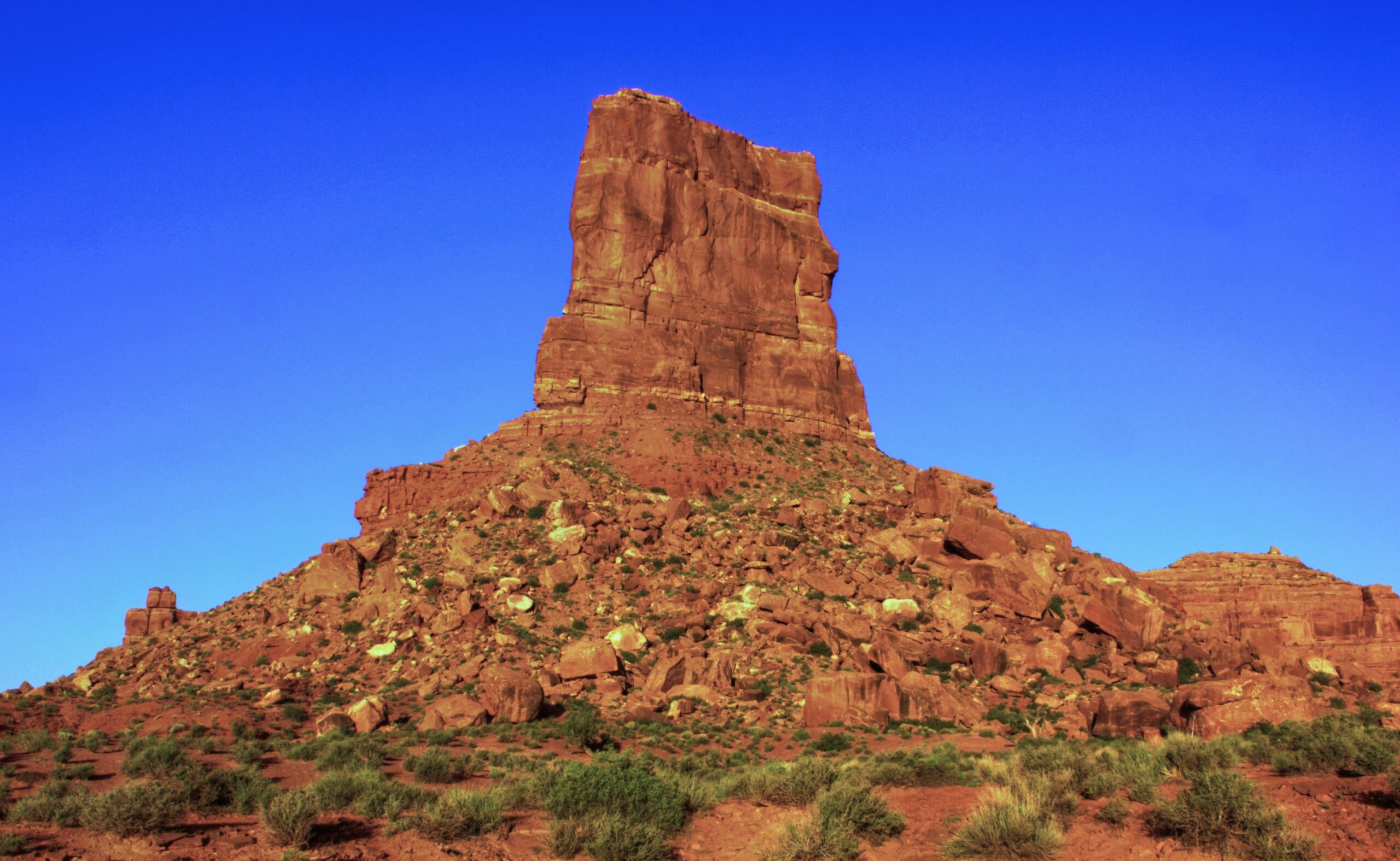
Most people meet Castle Rock at 75 miles per hour. You are on I-25 somewhere between Denver and Colorado Springs, the plains open up, and there it is on the west side of the highway: a blunt gray butte with a flat top and sheer sides, sitting above the town like something left behind by a bigger landscape. Then it is gone and you keep driving.
That is a mistake worth correcting. Castle Rock is the seat of Douglas County, it sits at 6,224 feet where the Front Range foothills give way to the high plains, and it has spent the last two decades turning from a quarry town into one of the fastest-growing communities in Colorado. The 2020 census counted 73,158 residents. By 2024 the estimate was 83,213. Growth like that usually flattens a place. Here it has mostly funded trails: roughly 6,000 acres of open space, 50 developed parks, and 87 miles of trail inside a town of 35 square miles.
It is an easy town to fit into a bigger trip. Thirty minutes from Denver, thirty minutes from Colorado Springs, and close enough to both that you can make it a half-day stop or a weekend base without feeling like you compromised. What follows is what is actually worth your time.
| Quick Facts | |
|---|---|
| Elevation | 6,224 feet (the butte tops out at 6,590 feet) |
| Population | 73,158 (2020 census), about 83,000 by 2024 estimate |
| County | Douglas County (county seat) |
| Founded | 1874 |
| Size | 34.7 square miles |
| From Denver | ~30 miles south on I-25 |
| From Colorado Springs | ~40 miles north on I-25 |
| Known for | The Castle Rock butte and its star, the Outlets, Douglas County Fair & Rodeo |
A Quarry Town That Got Its Name From a Rock
The rock came first by about 58 million years. A volcanic eruption blanketed this part of Colorado in roughly 20 feet of rhyolite, a hard, erosion-resistant stone. Everything softer around it wore away over the following epochs. What stayed was the caprock, and under it the butte that gives the town its name.
That same rhyolite is why there is a town here at all. Settlers arrived in the 1870s chasing gold rumors that did not pan out, and found something more useful instead: excellent building stone, close to a rail line, 30 miles from a city that was building itself as fast as it could. Castle Rock was founded in 1874, when the eastern Douglas County line was redrawn to its current position, and by the late 1800s the quarrying industry was running hard. Immigrant crews came for the work. The stone went north and ended up in the walls of Denver buildings.
The quarries eventually closed, the railroad traffic thinned, and Castle Rock spent most of the 20th century as a small county seat of a few thousand people. The explosive growth is recent, and it arrived from the north. What makes the town more interesting than a typical Front Range suburb is that the old part never got bulldozed for it. Downtown still runs on Wilcox and Perry Streets, in buildings that were here when the quarry workers were.
The Rock, the Star, and Rock Park
If you do one thing here, do this one. It is the whole identity of the place in about an hour.
Rock Park and the trail to the base
The Town of Castle Rock maintains a 1.4-mile loop through Rock Park that climbs from 6,220 feet to the base of the butte at the 6,590-foot summit, a gain of about 370 feet. The Town rates it Difficult, and bikes are prohibited. Crowd-sourced GPS data on AllTrails logs the same route closer to 1.9 miles and 433 feet, which is the usual gap between a designed trail and a hundred hikers wandering off it. Either way it is a short, steep, rocky hour with a payoff view over the whole Palmer Divide.
The trailhead is on Front Street, minutes from downtown. Park hours are dawn to dusk.
About climbing onto the rock itself
The maintained trail takes you to the base. The final scramble onto the top of the butte is a different proposition, and the Town is unusually direct about it. Their official guidance, more or less verbatim: the Town does not maintain and has not improved the rock scramble to the summit. A skilled hiker can probably make it. Climbing to the top is not generally illegal, but it is not recommended. The Rock has sheer walls dropping 50 feet or more, falls have caused serious injuries and deaths, and the climb down is harder than the climb up.
Take that at face value. Plenty of people go up. Some of them get hurt. The view from the maintained trail is genuinely good, and you are not missing much by stopping there.
The star
Look up at the butte between late November and late January and there is a star on it. That star has a better story than most town landmarks.
The town received the land containing the butte in 1936. Almost immediately, Works Progress Administration crews built a star on top of it, and it was lit every holiday season from 1936 through 1941. Then the war came and the town left it dark as a wartime sacrifice. On August 14, 1945, the day Japan surrendered, they reconfigured it into a V-for-victory symbol. It has been lit every year since December 7, 1945.
The lighting itself became an event in 1962, when the Chamber of Commerce built a festival around it. Starlighting now falls on the Saturday before Thanksgiving, runs through the afternoon in Wilcox Square, and culminates with the ceremony around 5 p.m., the star going on near 5:30, and fireworks immediately after. Carolers, a kids’ zone, food trucks, a firehouse chili supper, and several thousand people standing in the cold looking up. The star then stays lit through what the town calls the Season of the Star, going dark in late January. In recent years that endpoint has tracked the close of the National Western Stock Show in Denver.
It is one of the better small-town holiday traditions in the state, and it pairs well with the rest of Christmas in Colorado if you are building a December trip.
Outdoor Recreation in Castle Rock
The trail network is the strongest argument for staying more than an afternoon. Four systems are worth knowing.
Philip S. Miller Park
Three hundred acres at 1375 W. Plum Creek Parkway, and the most concentrated fun in town. The signature feature is Challenge Hill, a staircase of 200 steps climbing 178 feet, which locals treat as a scaled-down Manitou Incline. Dogs are not allowed on it. Beyond the stairs there are about 10.5 miles of trail, roughly 8 miles unpaved across four connecting loops and 2.5 miles of paved accessible segments near the activity complex.
The park also holds the Miller Activity Complex, with an indoor aquatics center running four lap lanes, a water slide and a zero-entry section, plus indoor batting cages and turf. Outside there is an amphitheater that hosts more than 60 events a year, a splash pad, an adventure playground, and four reservable pavilions.
For anyone traveling with teenagers who have run out of patience for scenery, The EDGE operates on site: a zip line course with 10 lines, an adventure tower with a 40-foot climbing wall and a 70-foot freefall platform, and an aerial trek course with more than 110 elements across three difficulty levels.
Ridgeline Open Space
More than 13 miles of trail on the west side of town, starting around 6,600 feet with only about 200 feet of gain, which makes it the friendliest running and mountain biking network in Castle Rock. Routes range from about a mile up to a 13.4-mile maximum if you link everything. Start at the Meyer Homestead Trailhead, which has restrooms and maps, or come in from Bison Park on the neighborhood side.
Ridgeline connects to Philip S. Miller Park via a pedestrian overpass at Wolfensberger Road, so you can string the two systems together on foot without touching a road.
Dawson Butte Ranch Open Space
Douglas County land southwest of town at 1753 Tomah Road, and the most distinctive trail experience in the area. The main loop runs 5 miles through ponderosa forest and meadow, shaded enough to be pleasant in July. What makes it unusual is the additional 2.7 miles of horse paths carrying more than 60 jumps, a genuine cross-country equestrian course open to the public. Even if you are on foot, it is worth walking a stretch of it.
Open one hour before sunrise to one hour after sunset. Leashed dogs are fine. No motorized vehicles.
East Plum Creek Trail
About 6 miles of paved trail following Plum Creek through the middle of town, and the easiest way for a visitor to stretch their legs without driving anywhere. From the Meadows Parkway lot you can head north roughly 1.8 miles through cottonwoods between two historic rail lines, or south about 3 miles into downtown through wetland habitat where beavers and migratory birds are common. There is parking at Festival Park and along South Perry Street, which makes it a natural after-dinner walk.
Castlewood Canyon State Park
Fifteen minutes east of town near Franktown, Castlewood Canyon is the single best outdoor half-day near Castle Rock and the one most visitors miss entirely.
The park covers 2,628 acres with about 12 miles of trail, running from open grassland into a surprisingly deep canyon carved by Cherry Creek. There are rock walls up to 60 feet that draw climbers, and over 100 bird species recorded.
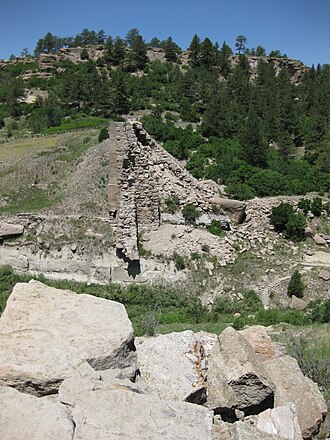
The history is the hook. Castlewood Dam was built across the canyon in 1890 to control Cherry Creek flooding. It failed on August 3, 1933, sending a wall of water down the creek and into Denver. The ruins are still standing in the canyon, and walking up to them is the best thing in the park.
Practical notes: open sunrise to sunset. The visitor center runs 9 a.m. to 5 p.m. Wednesday through Sunday and is closed Monday and Tuesday. A daily vehicle pass runs about $10 to $12 with Colorado plates and $15 to $17 out of state, so if you are hitting more than a couple of state parks on a trip, the annual pass pays for itself quickly. Check current rates before you go.
Downtown Castle Rock
Downtown is four or five walkable blocks centered on Wilcox and Perry Streets, and it has held onto more of itself than most Front Range downtowns of comparable growth. Festival Park anchors the south end with a creek, a splash area and an event lawn. The Castle Rock Museum occupies the old Denver & Rio Grande depot. The Barn, at 400 3rd Street, is a collective of independent boutiques rather than a single shop, and is a reliable rainy-afternoon hour.
Food and drink
Castle Cafe, 403 Wilcox Street, is the one to build a trip around. The building goes back more than a century and operated as the Castle Hotel and Bar in the 1890s, feeding quarry workers. The kitchen is known statewide for pan-fried chicken, and the distinction matters to them: pan-fried, not deep-fried, in a skillet, which is why it takes a while and why it is worth the wait. Chicken fried steak, meatloaf, brisket and pie fill out the rest.
Angie’s, 201 Fourth Street, has been serving Italian and Mexican food in Castle Rock since 1965. Sixty years in a town this size makes it an institution. Closed Mondays.
Union An American Bistro at 3 Wilcox Street is the contemporary end of downtown dining, with a beef tenderloin flatbread and a burger that regulars order without looking at the menu. Also closed Mondays.
Courtyard Social, 333 Perry Street, opened in 2023 into one of downtown’s larger spaces, running craft cocktails, oysters and scratch cooking across 5,000 square feet with patios front and back.
Crowfoot Valley Coffee, 734 Wilcox Street, roasts its own, opens at 6 a.m. on weekdays, and turns into a bar with taps and live entertainment in the evenings.
Homegrown Tap & Dough at 221 Wilcox does hand-tossed pizza and Colorado beer, and is the easiest call with kids.
Breweries
105 West Brewing Company, 1043 Park Street, has been brewing since 2015 and is veteran-owned. The thing that sets it apart is structural: it is a gratuity-free taproom, and tips that do come in go to local charities. They serve pizza and run a mug club, and they have since opened a second location in Colorado Springs.
Rockyard American Grill & Brewing, 880 Castleton Road, opened April 1, 1999 and was the first brewpub in this part of the Front Range. It is a full-service restaurant as much as a brewery. Year-round beers include Silverback Pale Ale, Hopyard IPA, Lightning Strike Stout, Redhawk Ale and Lynx Lager, with barrel-aged and seasonal releases rotating through.
Great Divide Brewery & Roadhouse, 215 Wilcox Street, is the Castle Rock outpost of the Denver brewery, and it is not just a satellite taproom. It runs a five-barrel pilot system producing small-batch beers you cannot get anywhere else, alongside the Denver core lineup. If you are working through Colorado’s brewery scene, this one earns the stop on the pilot beers alone.
The Outlets at Castle Rock
Say what you want about outlet malls. This one is Colorado’s largest, it is open-air rather than a windowless box, and it is the reason a meaningful share of Castle Rock’s visitor traffic exists.
More than 100 stores sit at 5050 Factory Shops Boulevard, directly off I-25 at exits 184 and 185, roughly equidistant from Denver and Colorado Springs at about 30 minutes each way. Coach, Nike, The North Face, Polo Ralph Lauren, Le Creuset and Restoration Hardware anchor a lineup that leans more upscale than most outlet centers. Colorado’s tourism office has ranked it among the top visited destinations in the state, which says something about either the shopping or the state.
Come on a weekday morning if you can. Weekend afternoons in December are a different experience entirely. If retail is genuinely part of your trip, our guide to Denver-area shopping covers what else is within range.
Annual Events in Castle Rock
The event calendar is unusually full for a town this size, and several of these are worth planning around.
- Castle Rock Sip & Savor, late June, at the Philip S. Miller Park amphitheater. Unlimited wine and bourbon tastings, food vendors and live music over an evening.
- Fourth of July, Festival Park, late afternoon into the evening with live music, a pie bake-off on Perry Street and food trucks. Fireworks normally launch from Miller’s Landing around 9:30 p.m., though Douglas County fire restrictions can and do cancel them, as happened in 2026. Treat the fireworks as weather-permitting, not guaranteed.
- Douglas County Fair & Rodeo, late July into early August at the fairgrounds on Fairgrounds Drive. A roughly 10-day run bridging two weekends, with rodeo performances ticketed separately. This is the oldest and largest thing on the calendar.
- Castle Rock Artfest, a weekend in mid-September on Perry Street and in Festival Park, with more than 110 exhibitors across sculpture, photography and jewelry.
- Oktoberfest, the third Saturday in September, downtown in Wilcox Square and Festival Park. German music, food trucks, free inflatables for kids, and a DJ dance party to close it out.
- Starlighting, the Saturday before Thanksgiving. See above. If you come to Castle Rock once, come for this.
Through the summer the town also runs Jazz in the Park and trolley rides on Wednesday evenings, and there is a downtown Restaurant Week in early October. If fall is your window, it lines up well with the rest of Colorado’s fall festival season.
Where to Stay
Castle Rock’s lodging is mostly modern and mostly clustered near the interstate and the outlets: the usual well-kept chain properties, easy parking, and rates that run well below Denver on the same night. That is the practical case for basing here if you are touring the Front Range. You are 30 minutes from downtown Denver and 30 from Colorado Springs, and you are paying neither city’s rate.
Downtown has a handful of smaller stays within walking distance of Wilcox Street, which is the better choice if your trip is about the town itself rather than about using it as a hub.
If you would rather be outside, Castlewood Canyon is day-use only with no camping, so the nearest options run toward private campgrounds and RV parks along the I-25 corridor. Our roundups of Colorado RV parks and glamping in Colorado cover what is within an hour.
Day Trips from Castle Rock
Cherokee Ranch & Castle (about 12 miles)
Northwest of town near Sedalia, on 3,441 acres of conservation land, sits a stone castle built in the style of a 15th-century Scottish keep more than a century ago. Mildred “Tweet” Kimball bought the property in 1954, filled it with art, antiques and rare books, and introduced Santa Gertrudis cattle to Colorado from it. It has operated as a foundation since 1996.
Read this part before you go: this is private land and there are no self-guided visits. Guided tours run about 90 minutes and require a reservation in advance, with payment at booking. The foundation states plainly that entering the property without a reservation or invitation is trespassing. Tour days and seasons vary, so check cherokeeranch.org or call ahead rather than driving out on spec. The main level is ramp-accessible; upper floors are stairs only.
Larkspur and the Colorado Renaissance Festival (about 15 miles)
Fifteen minutes south, Larkspur hosts one of the longest-running Renaissance festivals in the country across summer weekends. It is exactly as committed to the bit as you would hope. Our guide to the Colorado Renaissance Festival covers what to expect. Nearby Greenland Open Space, off I-25 at exit 167, offers roughly 8 to 11 miles of rolling grassland trail including a signature loop, plus a designated off-leash dog area.
Colorado Springs and Pikes Peak (about 40 miles)
Forty minutes south puts you at Garden of the Gods, the Pikes Peak corridor and Manitou Springs. It is a genuinely full day, and our guide to Colorado Springs and Pikes Peak sorts the highlights. Manitou Springs alone can absorb an afternoon.
Paint Mines Interpretive Park (about 45 miles)
East of Castle Rock near Calhan, the Paint Mines are banded clay hoodoos in colors that do not look like they belong on the Colorado plains. It is the strangest landscape within an hour of here and it is almost always uncrowded.
Denver (about 30 miles)
Thirty minutes north on I-25, though traffic between 3 and 6 p.m. can double that. Worth timing around. Our Denver guide covers the neighborhoods, and Red Rocks is an easy add on a show night.
Planning Your Visit to Castle Rock
Getting there. Castle Rock sits directly on I-25 at exits 181 through 187. From Denver International Airport it is about an hour via E-470, which is a toll road. RTD runs bus service connecting the town to the south metro area, but Castle Rock is a driving town and a rental car is the practical choice.
Getting around. Downtown is walkable end to end. Everything else, including the outlets, Philip S. Miller Park and Castlewood Canyon, needs a vehicle. Parking downtown is free and generally easy outside of event days.
Best time to come. September and October are the strongest months: warm days, cool nights, Artfest and Oktoberfest on consecutive weekends, and the trails at their best. Late November for Starlighting is the single best weekend if you want the town at its most itself. Summer is hot on the exposed trails by midday, so hike early. Winter is mild by Colorado standards at this elevation, and the trails stay usable most of the season. For a wider view, see our guide to the best time to visit Colorado.
Altitude. At 6,224 feet Castle Rock is high enough to dry you out and shorten your breath on Challenge Hill, but low enough that most visitors feel fine. Drink more water than usual and you will be fine.
Official resources. The Town of Castle Rock publishes trail maps and park hours. Visit Castle Rock keeps the event calendar. Colorado Parks and Wildlife has current Castlewood Canyon conditions and fees. The Douglas County Fair & Rodeo site handles fair dates and rodeo tickets.
Related Articles
- Franktown, Colorado — the gateway to Castlewood Canyon State Park
- Castle Pines, Colorado — the next town north on I-25
- Denver, Colorado — 30 minutes up the interstate
- Colorado Springs: Pikes Peak and More — the other end of the corridor
- The Colorado Renaissance Festival — summer weekends in nearby Larkspur
- Christmas in Colorado — where Starlighting fits in the holiday calendar
- Fall Festivals in Colorado — Artfest and Oktoberfest in context
- Colorado Breweries — the full brewery directory