Frisco, Colorado: Summit County’s Main Street Town — Five Ski Resorts, Dillon Reservoir, and the Heart of Colorado’s High Country

Frisco sits at 9,097 feet at the western end of Dillon Reservoir in Summit County — a position that makes it the geographic center of one of the most resort-dense concentrations in North American skiing. Within 30 minutes of Frisco’s Main Street, five major ski resorts are operating: Breckenridge, Keystone, Arapahoe Basin, Copper Mountain, and Loveland. The town is connected to Breckenridge by a paved recreation path and linked to Copper Mountain and Keystone by the Summit Stage free bus system. Yet despite its proximity to all this resort infrastructure, Frisco has managed to maintain a distinct identity as an actual town — a place where people live year-round, where independent businesses anchor a genuine main street, and where the outdoor recreation extends well beyond ski resort boundaries into the Tenmile Range and the reservoir that defines its eastern edge.
Main Street Frisco is the kind of mountain town commercial corridor that feels organic rather than manufactured. The buildings are modest in scale, the storefronts are occupied primarily by locally owned restaurants, breweries, gear shops, and galleries, and the pedestrian energy — particularly on summer evenings and winter weekends — reflects a community that genuinely uses its downtown rather than merely displaying it for tourists. The historic Frisco Town Hall and the log cabin district near the water treatment plant preserve the town’s pioneer heritage alongside the more recent development. Frisco does not have the Victorian grandeur of Leadville or the silver-boom architecture of Silverton, but it has something those towns lack in summer: a warm-weather recreation scene centered on Dillon Reservoir that is entirely distinct from the skiing that dominates Summit County’s identity from November through April.
What Frisco offers that its Summit County neighbors largely do not is affordability, accessibility, and authenticity in combination. Breckenridge has the resort polish and the higher prices; Keystone and Copper Mountain are resort compounds with limited independent character; Silverthorne has the outlet stores. Frisco occupies the middle — genuinely convenient to everything in Summit County, with its own recreation assets, a functional downtown, lodging at prices below Breckenridge, and the kind of local business culture that sustains a real community through shoulder seasons. For visitors who want a Summit County base that functions as a town rather than a resort, Frisco is the answer.
| Category | Details |
|---|---|
| County | Summit County |
| Elevation | 9,097 feet (2,773 m) |
| Population | ~3,500 year-round; significantly larger in ski season |
| Region | Central Colorado / Summit County |
| Nearby Ski Resorts | Breckenridge (9 mi), Copper Mountain (8 mi), Keystone (10 mi), A-Basin (15 mi), Loveland (18 mi) |
| Reservoir | Dillon Reservoir — sailing, kayaking, paddleboarding, fishing |
| Avg. Summer High | 72°F (July) |
| Avg. Winter Low | 8°F (January) |
| Annual Snowfall | ~150 inches |
| Access | I-70 Exit 203 (Frisco/Breckenridge) |
| Known For | Summit County hub, reservoir recreation, Tenmile Range trails, Main Street dining |
| Best Seasons | Winter (skiing) and Summer (reservoir, biking, hiking) |
History of Frisco
Frisco’s origins trace to the silver and lead mining boom of the 1870s and 1880s, when prospectors working the Tenmile Canyon and surrounding mountains established a supply camp at the confluence of Ten Mile Creek and the Blue River. The town was platted in 1879 and named — with some confusion among historians — either for San Francisco or from a corruption of a local phonetic rendering of the area’s name. The Denver, South Park & Pacific Railroad arrived in 1882, running its narrow-gauge line through Tenmile Canyon and connecting Frisco to the larger Colorado rail network, cementing its role as a supply and shipping point for the mines above.
The mining boom faded by the early 20th century, as it did throughout the Colorado Rockies, but Frisco survived as a ranching and logging community while nearby silver towns like Kokomo were completely abandoned. The construction of the Dillon Reservoir dam in 1963 transformed the region permanently: the original town of Dillon was submerged under the rising water, its residents relocated to higher ground, and the reservoir’s recreational potential gradually attracted a new generation of visitors. The interstate highway era and the growth of Summit County’s ski industry in the 1960s and 1970s positioned Frisco as the county’s central transit hub — a role it still occupies today with its Summit Stage bus connections to all five nearby resorts.
The Frisco Historic Park on Main Street preserves the physical memory of the mining and ranching era through eleven original log structures moved to a central location — a one-room schoolhouse, a chapel, a pioneer home, a jail — that collectively illustrate the texture of life in a high-altitude Colorado supply town before skiing became the economic foundation of Summit County. The park and its associated museum are among the better small-town history installations in Colorado and provide the essential backstory for understanding how a mining camp became one of Colorado’s most strategically located resort-access towns.
Dillon Reservoir: Frisco’s Summer Centerpiece
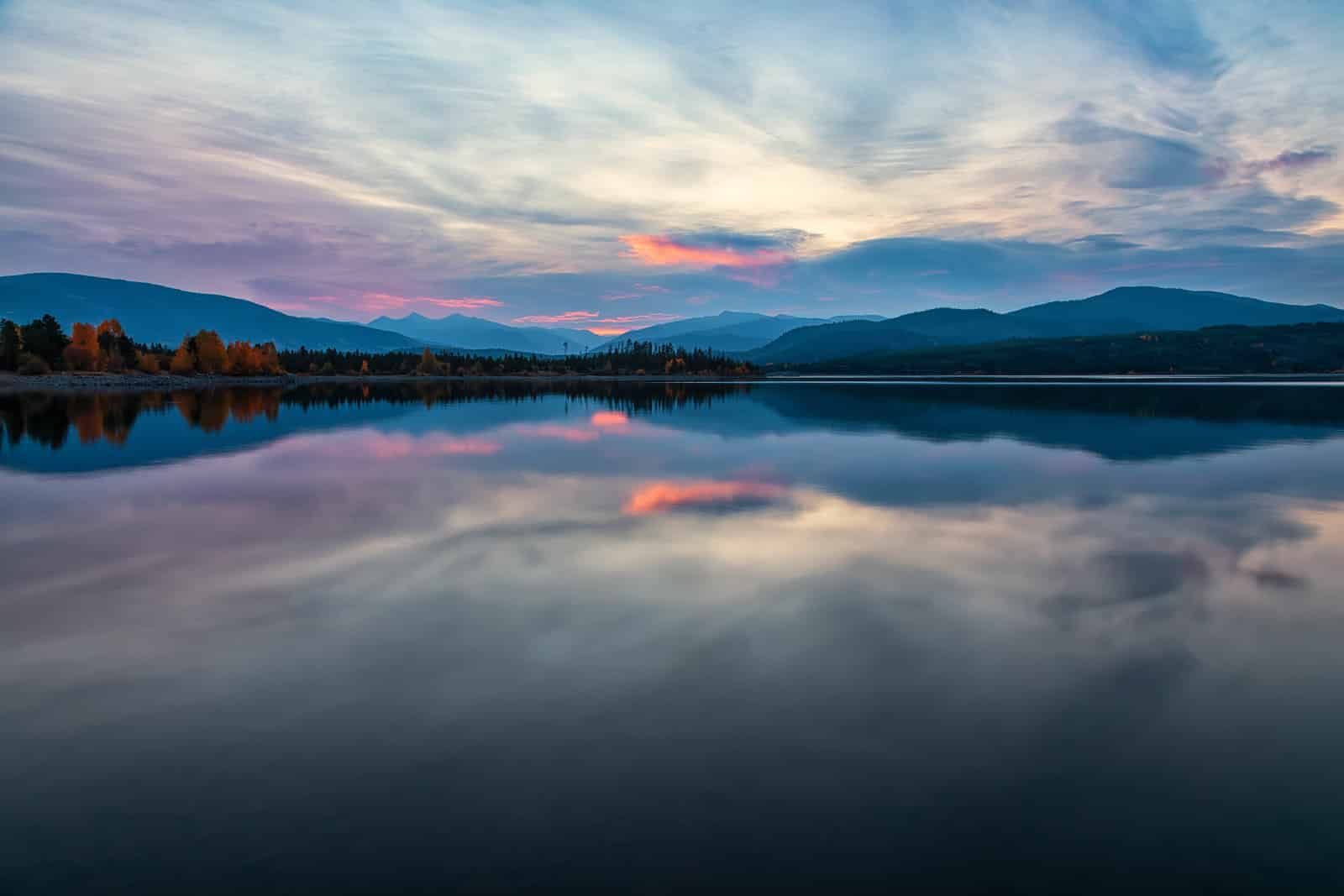
Dillon Reservoir is the defining geographic feature of Frisco’s summer identity — a 3,233-acre high-altitude reservoir at 9,017 feet, framed by the Tenmile Range to the south and the Gore Range to the north, with the Blue River arm extending north toward Silverthorne and the Snake River arm reaching east toward Keystone. The reservoir was created in 1963 by the damming of the Blue River as part of the Colorado-Big Thompson water project, and despite its utilitarian origin it has become one of the most beautiful and most-used recreational water bodies in the Colorado Rockies. The setting is spectacular — the surrounding peaks reflect in the water with clarity that makes it difficult to look anywhere else on a calm morning.
Sailing and Motorized Boating
Dillon Reservoir is one of the few Colorado mountain reservoirs with consistent afternoon sailing winds, and the Dillon Yacht Club — founded in 1966 — hosts a summer racing series that makes Wednesday and Saturday evenings on the water some of the most animated scenes in Summit County. The marina at Frisco Bay has slips for private sailboats, rental boats, and sailing instruction programs. The afternoon winds that make sailing productive at Dillon typically build from the southwest between noon and 2 PM and can reach 15 to 25 knots on strong days. Motorized boats up to a defined horsepower limit are also permitted, and the Frisco Bay Marina offers powerboat and pontoon rentals for fishing and cruising excursions across the reservoir’s five-mile span.
Kayaking, Paddleboarding, and Fishing
Non-motorized paddling on Dillon Reservoir is exceptional, particularly in the morning before the afternoon winds arrive. The irregular shoreline has coves, inlets, and the river arms to explore, and the water clarity allows views several feet down to the submerged remnants of the original town of Dillon, which was relocated when the reservoir filled in 1963. Kayak and stand-up paddleboard rentals are available at both marinas and at several outfitters in Frisco. Fishing is excellent year-round: Dillon Reservoir holds brown trout, rainbow trout, and lake trout in strong numbers, with the deep water — reaching nearly 260 feet at maximum pool — producing trophy-size lakers for trolling anglers. Ice fishing on the frozen reservoir in January and February is a dedicated pursuit for local anglers. A Colorado fishing license is required; current regulations are available through Colorado Parks and Wildlife.
Dillon Reservoir Loop Trail
The 18-mile paved trail circling the entire perimeter of Dillon Reservoir is one of the signature recreational routes in Summit County — a multi-use path used by cyclists, runners, and walkers that provides continuous lake views, mountain vistas, and access to the surrounding towns of Frisco, Dillon, and Silverthorne. The full loop is an excellent half-day cycling route; the sections closest to Frisco and the marina area are the most popular for casual walking and shorter out-and-back runs. The trail connects to the Summit County paved trail network and to the dedicated recreation path toward Breckenridge.
Skiing: Five Resorts Within 30 Minutes
The argument for Frisco as a ski base is simple: no other town in Colorado puts five ski resorts within a 30-minute drive without charging Breckenridge or Vail prices for accommodation. The Summit Stage free bus connects Frisco directly to Breckenridge, Keystone, and Copper Mountain without requiring a car, and the I-70 corridor provides quick access to Arapahoe Basin and Loveland. Each resort has a distinct character; a week based in Frisco can deliver five genuinely different skiing experiences without redundancy.
Breckenridge (9 Miles South)
Breckenridge is Summit County’s flagship resort — one of the most visited ski areas in North America, with five interconnected mountain peaks covering 2,908 acres of terrain, a vertical drop of 3,398 feet, and a top elevation of 12,998 feet on Peak 6. The resort has terrain for every ability level, from the wide beginner runs of Peak 8’s lower mountain to the expert bowls and chutes of Peaks 7 and 6. The historic Victorian town at the base has an excellent dining and après-ski scene. The Breckenridge Free Ride bus connects to Frisco; driving takes about 15 minutes on CO-9.
Copper Mountain (8 Miles West)
Copper Mountain is the closest major resort to Frisco and one of the best-designed ski mountains in Colorado — the terrain is naturally organized so beginner, intermediate, and expert runs funnel to separate base areas, reducing cross-traffic and improving the experience for all ability levels. The resort covers 2,465 acres with a 2,601-foot vertical drop. Copper does not have an independent town, making Frisco the ideal base for Copper skiers who want a genuine Main Street within reach.
Keystone (10 Miles East)
Keystone is a Vail Resorts property with a reputation for night skiing — it typically opens night operations earlier than any other Colorado resort and maintains them through the season, making it the go-to destination for evening ski sessions. The mountain covers 3,148 acres across three interconnected peaks: Dercum Mountain, North Peak, and The Outback. Keystone’s combination of night skiing, family-friendly terrain, and Summit Stage bus connection from Frisco makes it a natural addition to any Summit County ski week.
Arapahoe Basin (15 Miles East)
Arapahoe Basin — A-Basin to its regulars — is Colorado’s highest ski area at a base elevation of 10,780 feet and a summit of 13,050 feet. The mountain has a reputation for expert terrain, for retaining snow into June (sometimes July) when other resorts have closed, and for a countercultural anti-resort character that has made it a cult favorite. The parking lot tailgate culture on sunny spring skiing days is an A-Basin tradition unlike anything at the larger corporate resorts.
Loveland (18 Miles West)
Loveland Ski Area, located directly on the Continental Divide at Eisenhower Tunnel, is one of Colorado’s most consistent high-altitude snowpack destinations at 10,800 feet base and 13,010 feet summit. Loveland is independently owned and operates without the corporate resort infrastructure of its Vail Resorts neighbors, keeping lift ticket prices comparatively reasonable. The high-alpine terrain above treeline on Loveland Basin is spectacular on clear days, and the resort’s proximity to Frisco via I-70 makes it a quick morning drive.
Outdoor Recreation in Frisco
Tenmile Canyon National Recreation Trail
The Tenmile Canyon National Recreation Trail follows the old Denver, South Park & Pacific Railroad grade through Tenmile Canyon south of Frisco toward Copper Mountain, covering approximately 12 miles one-way at a gentle grade. The trail is paved and accessible to cyclists, runners, and walkers, following Ten Mile Creek through a narrow canyon with the Tenmile Range rising steeply on both sides. This is one of the most popular non-motorized corridors in Summit County and connects Frisco directly to the Copper Mountain resort base. The canyon section is particularly beautiful in fall when aspen turns gold.
Peak One (Tenmile Range)
Peak One, the northernmost summit of the Tenmile Range at 12,805 feet, is accessible from a trailhead near the Frisco Marina and offers exceptional views of Dillon Reservoir from above. The trail gains approximately 3,700 feet over 4.5 miles one-way, climbing through spruce and fir forest before emerging onto open tundra and the rocky summit ridge. The proximity to Frisco — the trailhead is within walking distance of Main Street — makes it one of the most convenient significant summit hikes in Summit County. An early morning start is essential; the exposed summit ridge demands being above treeline before afternoon storms develop in summer.
Rainbow Lake Trail
Located in White River National Forest south of Frisco, the Rainbow Lake Trail climbs through forest and meadow to a scenic alpine lake with views of the surrounding peaks. The hike covers approximately 5 miles round trip with moderate elevation gain — one of the more family-accessible full mountain hikes in the immediate Frisco area. The lake sits in a cirque below the Tenmile ridge and provides good fishing for small brook trout as well as a scenic lunch destination.
Mountain Biking
Summit County has invested heavily in mountain bike trail development, and Frisco sits at the center of an expanding network ranging from flowy singletrack through aspen groves to demanding technical terrain on the Tenmile Range. The paved recreation path connecting Frisco to Breckenridge (9 miles, mostly flat to gently rolling) is the backbone cycling route in Summit County and excellent for road bikes, hybrid bikes, and e-bikes. The Meadow Creek Trail system in White River National Forest provides purpose-built singletrack with good variety. Just 8 miles west, Copper Mountain operates a lift-served bike park in summer with green through black difficulty trails accessible via the American Flyer and Excelerator lifts.
Nordic Skiing and Winter Recreation
Frisco’s winter recreation extends well beyond the five downhill ski resorts in its orbit. The Frisco Nordic Center, operated by the Town of Frisco, maintains over 35 kilometers of groomed classic and skate skiing trails on the Frisco Peninsula between the marina and the reservoir. The trail network winds through spruce forest and open meadow with views of the Tenmile Range and the frozen reservoir, suited to a wide range of ability levels. The center rents equipment including skis, boots, poles, and snowshoes, and offers lessons for beginners. The day lodge has a warming area and small cafe. When the reservoir freezes solidly — typically by late December — the surface becomes one of the world’s highest and largest natural ice skating venues, an extraordinary experience with peaks ringing the horizon in every direction.
Food and Drink in Frisco
Main Street Frisco has a dining scene that punches above its weight for a town of 3,500 year-round residents. Butterhorn Bakery & Cafe is Frisco’s essential morning institution — house-baked breads, pastries, and breakfast items served in a warm and consistently busy space; arrive early on weekends. Log Cabin Cafe has operated since 1963 in a genuine log cabin and serves the best eggs Benedict at 9,000 feet. For lunch, Frisco Fresh Market functions as both an artisan grocery and an excellent prepared-foods deli. Lost Cajun brings Louisiana-style cooking to altitude — the crawfish etouffee and jambalaya are genuine and consistently among the most praised dishes in Frisco. Vinnie’s Pizzeria is the go-to for relaxed family pizza without the lines of Breckenridge, while Peppino’s handles full Italian dinners for a loyal local following.
On the beer front, Frisco benefits from serious craft brewing. Upslope Brewing maintains a Summit County taproom drawing loyal locals, and Outer Range Brewing Co. — one of Colorado’s most acclaimed craft breweries, known nationally for its hazy IPAs — has a taproom that draws serious beer enthusiasts from across the Front Range. The Breckenridge Brewery Frisco location rounds out the options with its full food menu and flagship taps. For something without the brewery atmosphere, Frisco Tavern is the neighborhood bar without pretension: cold beers, darts, and a genuinely local clientele.
Where to Stay in Frisco
Frisco’s lodging inventory offers more variety and generally better value than comparable lodging in Breckenridge. Hotel Frisco on Main Street is the most stylish option — a boutique hotel with well-appointed rooms, a comfortable common area, and walking distance to dining and transit connections. Best Western Lake Dillon Lodge provides reliable full-service accommodation with a heated pool and hot tub, consistently one of the best-value mid-range options in Summit County. For a more personal experience, Frisco Inn on Galena is a European-style B&B with personalized service and a quiet residential setting. Budget travelers have Frisco Lodge, a hostel popular with solo travelers and ski-season workers. The majority of available accommodation is condo and vacation rentals — many originally built as ski-season investment properties now available through VRBO and Airbnb at prices significantly below Breckenridge. For groups and families staying a week or more, the condo market offers the best value. Reserve two to four months ahead for January and February holiday periods.
Campers have excellent options near Frisco. Heaton Bay Campground (72 sites) and Peak One Campground (79 sites) both sit on Dillon Reservoir managed by White River National Forest, offering reservoir access and mountain views from May through September. Reservations at recreation.gov fill quickly — book well in advance for summer weekends.
Day Trips from Frisco
Breckenridge (9 Miles South)
The most natural day trip from Frisco, Breckenridge is 9 miles south via CO-9 or accessible by free Summit Stage bus or the paved recreation path. The Victorian historic district on Main Street has excellent dining, galleries, and boutique shopping. The ski resort operates both in winter and with summer lift access for mountain biking and hiking. The Breckenridge Distillery and Breckenridge Brewery make it a destination for non-skiers as well.
Vail (30 Miles West)
Vail is 30 miles west on I-70 — less than 30 minutes in normal traffic, though holiday and ski-weekend congestion can extend that significantly. As one of the world’s premier ski resorts, Vail offers scale and terrain variety well beyond Summit County’s resorts. Vail Village and Lionshead have world-class dining and shopping. In summer, the Gerald R. Ford Amphitheater hosts the Bravo! Vail classical music festival and other major events.
Georgetown and Clear Creek Canyon (30 Miles East)
Georgetown, 30 miles east on I-70, is a remarkably well-preserved silver mining town at 8,519 feet with a Victorian historic district, the Georgetown Loop Railroad (a narrow-gauge excursion railroad over Devil’s Gate viaduct), and the Hamill House and Hotel de Paris museums. The drive through Clear Creek Canyon between Georgetown and Golden on US-6 is one of Colorado’s most scenic canyon drives, popular for rock climbing and whitewater kayaking.
Leadville (30 Miles South via Fremont Pass)
Leadville is accessible from Frisco via CO-91 over Fremont Pass (11,318 feet) in about 35 minutes — a short drive that crosses a dramatic pass and descends into the historically rich Arkansas River Valley. The combination of Harrison Avenue’s Victorian character, the National Mining Hall of Fame, the proximity of Mount Elbert and Mount Massive (Colorado’s two highest peaks), and Turquoise Lake make it one of the most rewarding half-day or full-day side trips from Summit County.
Planning Your Visit to Frisco
Getting There: Frisco is one of the most accessible mountain towns in Colorado. I-70 passes directly through town — Exit 203 drops you onto Main Street within two minutes. From Denver, the drive west on I-70 covers approximately 70 miles and takes 1.5 to 2 hours under normal conditions, though I-70 on Friday afternoons and Saturday mornings during ski season is notorious for severe westbound traffic. Arriving Thursday evening or by midday Friday avoids the worst congestion. Denver International Airport is the primary hub for air travelers; Eagle County Regional Airport near Vail (about 45 miles west) provides a closer alternative with limited service.
Getting Around: The Summit Stage free bus system connects Frisco to Breckenridge, Keystone, Copper Mountain, Dillon, and Silverthorne at regular intervals throughout the day during ski season, with reduced frequency in summer. The Frisco Transfer Station on Main Street is the central hub. Using Summit Stage for ski days eliminates parking stress and allows the entire group to relax on the ride home.
Best Time to Visit: Frisco is a genuine year-round destination. Winter (December through March) brings skiing at five resorts and Nordic skiing at the Nordic Center. Summer (June through August) offers reservoir recreation, hiking, biking, and the annual Frisco BBQ Challenge in June. Fall (late September to mid-October) is spectacular for aspen color along the Tenmile Canyon and the Breckenridge recreation path. Current visitor information and trail conditions are available at townoffrisco.com and summitchamber.org.
Related Articles
Explore more of Summit County and the surrounding region:
- Breckenridge, Colorado — Victorian history, five peaks, and Summit County’s premier resort town
- Dillon, Colorado — Gateway to Dillon Reservoir and the heart of Summit County
- Leadville, Colorado — America’s highest city, 14ers, and the legendary Leadville 100
- Steamboat Springs, Colorado — Champagne powder, hot springs, and cowboy culture